Latest Selling Sodium Ion Battery Supplier
As a complementary technical solution to lithium batteries, Vcell Power Sodium Ion Battery has emerged as a new preferred option for energy storage and low-speed electric vehicles. Vcell Power officially launched its battery production line in 2024. Adopting a full-tab structure, our products feature abundant raw material supply, outstanding low-temperature performance and superior safety with qualified needle penetration test. All items are certified by IEC, UN38.3, UL, CE, RoHS, KC and CB. This article elaborates on technical principles, core advantages, application scenarios and selection guidelines.
What is sodium ion battery?
Vcell Power Sodium Ion Battery is a mature, cost-effective rechargeable battery, serving as an ideal supplement to lithium batteries. Its core features are as follows:
· Basic Principle: It is a rechargeable battery. Energy is stored and released via sodium ion movement between electrodes. It works similarly to lithium batteries, with abundant, geo-unrestricted sodium resources.
· Full-tab Structure: Adopts full-tab design to lower internal resistance and optimize heat dissipation. It shortens electron transmission path, supporting faster charge and discharge rates.
· Material & Product Type: Compatible with layered oxides, Prussian blue and polyanionic cathode materials. Vcell Power mainly supplies mature cylindrical sodium ion batteries.
· Technical Experience: Backed by 20+ years of battery manufacturing experience. Founded in 2001, we launched 18650 cells in 2004 and achieved official battery mass production in 2024.
Working Principle of the battery
Charging Process: Sodium ions detach from cathode materials, pass through electrolyte and separator, and intercalate into anode materials. The cathode becomes sodium-deficient while the anode turns sodium-rich.
Discharging Process: Sodium ions separate from the anode and return to the cathode. Electrons flow from the anode to the cathode via external circuits to supply power for equipment.
Advantages of Full-tab Structure
The full-tab structure takes all edges of electrode tabs as current collection points. It shortens electron transmission path and reduces internal resistance, supporting high-rate charge and discharge.
What are the advantages of the battery over traditional lithium batteries?
Compared with conventional lithium batteries, Vcell Power Sodium Ion Battery has the following prominent strengths:
|
Advantage |
Description |
Practical Engineering Value |
|
Abundant Raw Materials |
Sodium resources are far more sufficient than lithium with lower material cost |
Mitigate price fluctuation risks and stabilize supply chain |
|
Eco-friendliness |
Raw materials are environmentally friendly |
Comply with ESG standards in European and American markets |
|
High Safety |
Passes strict needle penetration test |
No complex thermal management required for energy storage systems to cut overall costs |
|
Long Cycle Life |
Over 3000 charge-discharge cycles |
Ideal for long-lifespan energy storage and commercial vehicle projects |
|
Excellent Low-temperature Performance |
Works well in cold regions |
Outperforms regular lithium batteries on discharge capacity at low temperatures |
|
Fast Charging |
Supports high-rate discharge |
Perfect for scenarios requiring fast charging such as battery swap stations |
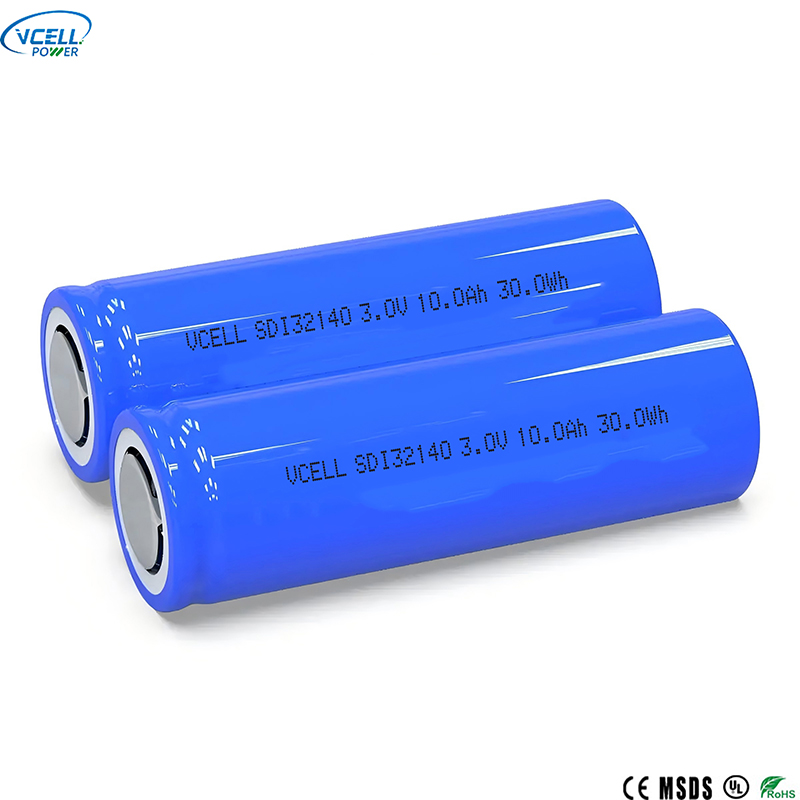
Take 3.0V 10Ah 32140 Cylindrical Sodium Ion Battery as an example. Its cylindrical housing combined with full-tab structure achieves low internal resistance and high-rate performance. It maintains high capacity retention at low temperatures, which brings great value to outdoor energy storage devices in cold northern regions.
Main Application Scenarios of the Battery
· Starting Batteries & Auxiliary Power Supplies Cylindrical sodium ion batteries work perfectly as starting and auxiliary power sources, featuring strong high-rate discharge and reliable cold start performance.
· Large-scale Energy Storage Widely used for power generation side energy storage (wind & solar power matching) and grid frequency & peak regulation. With over 3000 cycles, it delivers superior full-lifecycle cost advantages for energy storage projects.
· Two-wheeled Electric Vehicles Suitable for electric bicycles, electric motorcycles and battery swap stations. Its high safety makes it a reliable choice for battery swap networks in densely populated urban areas.
· Low-speed Electric Vehicles Applied to sightseeing cars, sanitation vehicles, golf carts and more. It fits scenarios with low requirements on energy density but strict demands on cost and safety.
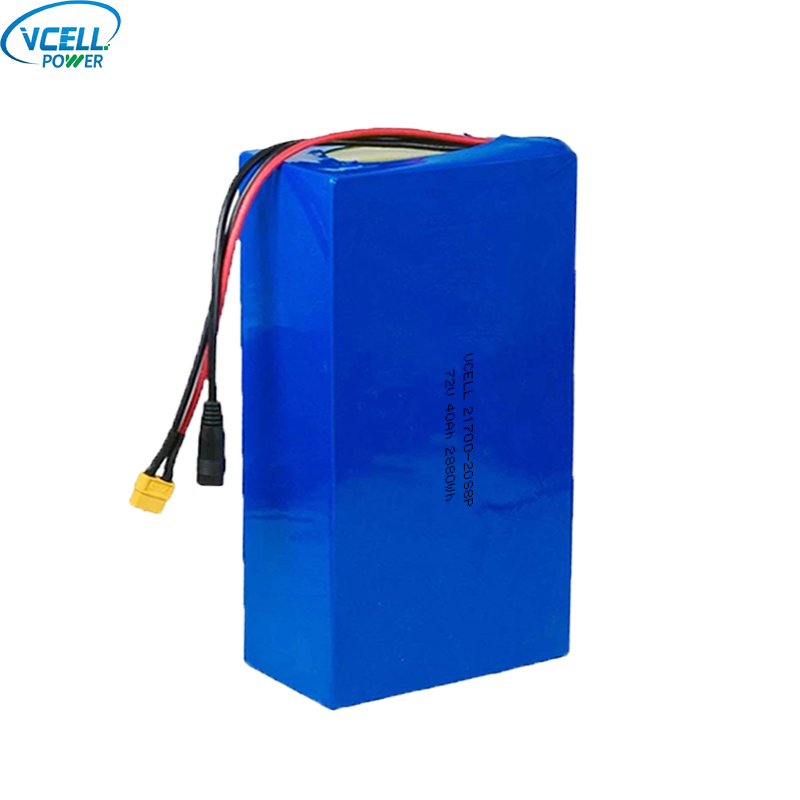
· 3.0V 10Ah 32140 Cylindrical Sodium Ion Battery can be assembled into 48V or 72V battery packs via series and parallel connection, widely used for two-wheeled electric vehicles and small-scale energy storage systems.
Technical Foundation of Vcell Power in battery Industry
Vcell Power launched sodium ion battery mass production in 2024 based on decades of accumulated technologies:
· 2001-2003: Produced Ni-MH batteries and mastered electrochemical material formulation and encapsulation techniques
· 2003-2004: Developed lithium ion batteries and launched the first 18650 cell in July 2004
· 2007 to present: Manufactured LiFePO4 batteries and acquired mature technologies for high-safety cell production
· 2024: Started mass production of sodium ion batteries by utilizing existing cylindrical production lines
Our products hold IEC, UN38.3, UL, CE, RoHS, KC and CB certifications, and have been exported to more than 80 countries including Europe, the United States, South Africa and Australia.The battery from Vcell Power is a mature commercial product instead of laboratory prototype with reliable compliance and stable supply chain.
We also provide customized battery pack services covering 12V, 24V, 48V, 51.2V and 72V voltage platforms. We can complete series-parallel assembly and BMS matching according to customer requirements.
How to Select the Right Sodium Ion Battery for Your Project
Follow the steps below to select proper battery:
Step 1: Confirm Voltage Platform
The nominal voltage of single sodium ion cell is 3.0V. Total voltage = 3.0V × Number of cells in series. For example, 16 cells in series form a 48V pack, and 24 cells form a 72V pack.
Step 2: Evaluate Capacity Demand
Take 3.0V 10Ah 32140 Cylindrical Sodium Ion Battery for reference, the capacity of single cell is 10Ah. Calculate total cell quantity based on required total energy, then arrange cells in series and parallel reasonably.
Step 3: Confirm Working Environment
· Low-temperature operation: Sodium ion battery performs excellently in cold areas.
· Safety requirements: Our products pass strict needle penetration tests.
· Cycle life demand: Typical cycle life exceeds 3000 times.
Step 4: Match BMS and Connectors
Sodium ion batteries have different cut-off voltage from lithium batteries, so dedicated BMS is required. Vcell Power provides supporting protection solutions and customized connectors.
Frequently Asked Questions
Q: What are the differences between the battery and lithium battery?
A: They work similarly. Sodium ion batteries feature richer raw materials, lower cost, higher safety and better low-temperature performance.
Q: What is the cycle life of your battery?
A: Over 3000 cycles under normal use.
Q: Can it pass needle penetration test?
A: Yes, it passes strict needle penetration test with high safety.
Q: What certifications do your products have?
A: We have IEC, UN38.3, UL, CE, RoHS, KC and CB certifications.
Q: Is it suitable for cold regions?
A: Yes. The Sodium Ion Battery runs well at low temperatures and outperforms regular lithium batteries.
Q: Do you support sample and small-batch orders?
A: Yes. Contact our sales team for relevant details.
- View as
3.0V 10Ah 32140 Cylindrical Sodium Ion Battery
As a China-based sodium-ion battery manufacturer, Vcell Power presents the 3.0V 10Ah 32140 Cylindrical Sodium Ion Battery – designed for energy storage and light electric applications. This cylindrical cell delivers 10Ah capacity, 112Wh/kg energy density, and over 3000 cycles. With reliable operation from -40°C to 65°C, it offers a practical alternative to lead-acid and a cost-effective complement to lithium-ion solutions.
Read MoreSend Inquiry
VCELL POWER is a dedicated Sodium Ion Battery manufacturer and supplier in China. We warmly welcome you to wholesale high quality products at competitive price from our factory.